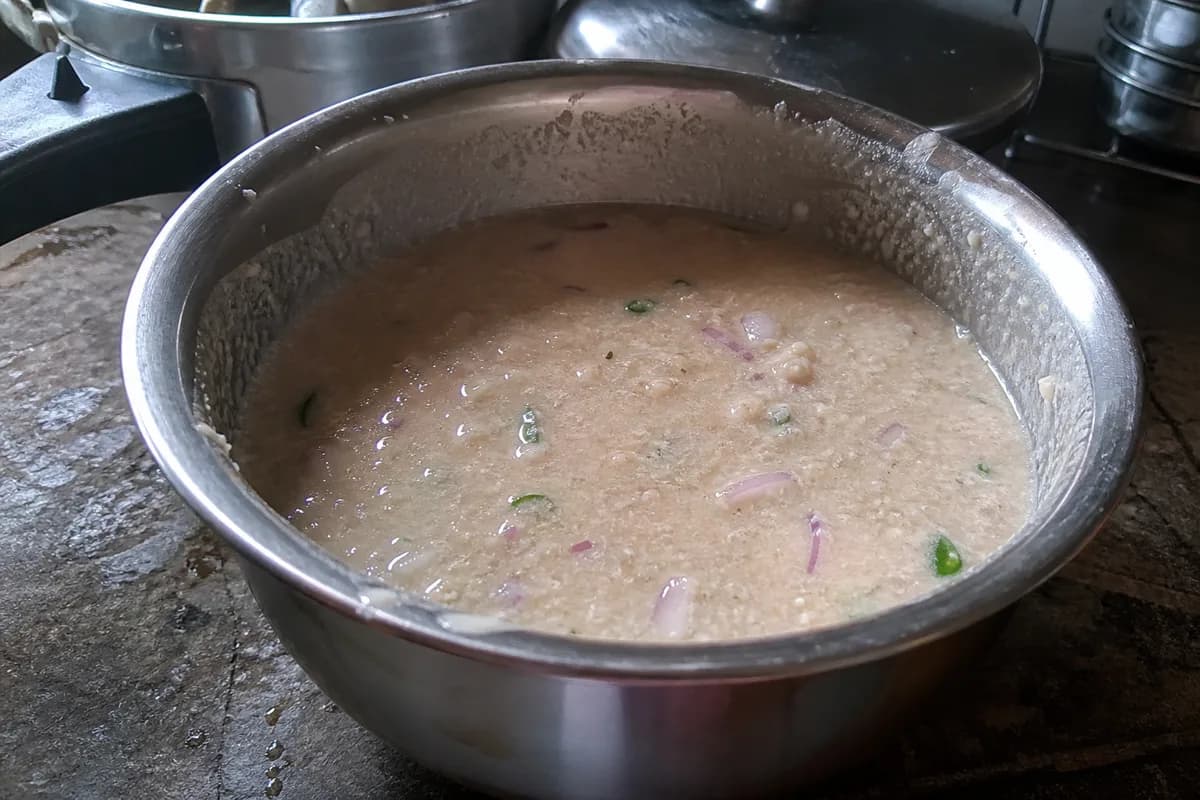
Kodo Millet Ambali (Arikelu / Varagu Ambali)
Kodo is the sturdy one. It needs a long soak before it will cook down, but the patience pays off in a thick, earthy gruel that sours cleanly overnight. Arikelu in Telugu and varagu in Tamil, it sits among the Siridhanya millets that Dr Khadar Vali helped bring back to everyday tables. Served cool over buttermilk with a pinch of salt, it is a steadying drink for a hot afternoon.
Prep Time
6-8 hr soak + overnight ferment
Cook Time
25 min
Servings
4
Difficulty
Easy
Ingredients
- Kodo millet (arikelu) — 1/2 cup (95 g)
- Water — 5 cups, plus extra to loosen
- Buttermilk (or thin curd) — 1 cup
- Salt — to taste (add at serving)
- Small onion, finely chopped — 1 (for serving)(optional)
- Curry leaves — 1 sprig (for serving)(optional)
- Green chili, finely chopped — 1 (for serving)(optional)
Instructions
- 1
Rinse the kodo millet and soak it for 6 to 8 hours. Plan the soak for the daytime so the cooking lands in the evening.
- 2
Drain, add to 5 cups of fresh water, and bring to a boil. Simmer on low for 20 to 25 minutes until the grains are very soft and broken down.
- 3
Let the gruel cool to room temperature, then spoon it into a clay pot or glass jar without salt.
- 4
Cover loosely with a cloth and ferment overnight, 8 to 10 hours, until pleasantly sour.
- 5
Next morning, mash the grains, then whisk in the buttermilk and enough cold water for a drinkable body.
- 6
Add salt to taste and top with onion, curry leaves and green chili if using.
- 7
Serve cool, without reheating, to keep the live cultures.
Tips
- •Soak kodo well. Under-soaked grains stay firm and ferment unevenly.
- •Buy kodo unpolished where you can. The whole grain holds more fiber and ferments better.
- •Cook it low and slow until the grains collapse, which gives the smoothest ambali.