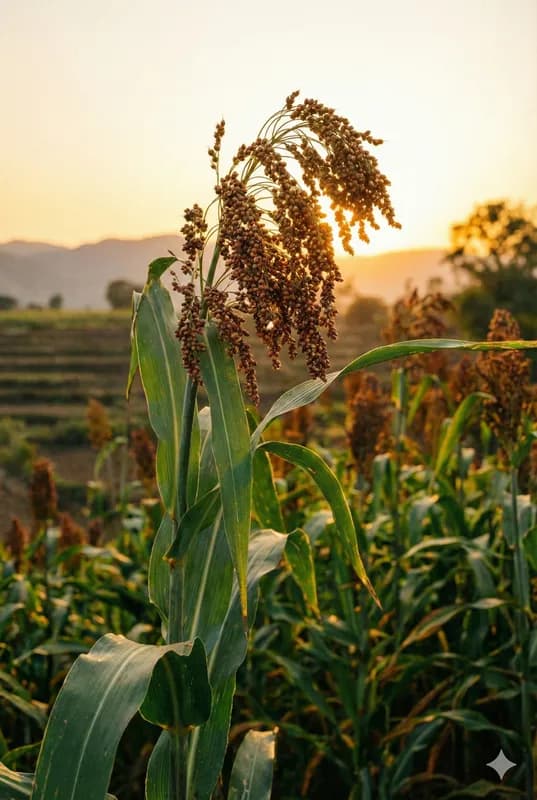
Sorghum
Sorghum bicolor
Jowar
A versatile grain, high in fiber, antioxidants, and culinary adaptability
Names in Indian Languages
| Language | Name |
|---|---|
| Hindi | ज्वार (Jowar) |
| Tamil | சோளம் (Cholam) |
| Telugu | జొన్నలు (Jonnalu) |
| Kannada | ಜೋಳ (Jola) |
| Malayalam | ചോളം (Cholam) |
| Marathi | ज्वारी (Jwari) |
| Bengali | জোয়ার (Jowar) |
| Gujarati | જુવાર (Juvar) |
| Odia | ଜୁଆର (Juara) |
| Punjabi | ਜਵਾਰ (Jawar) |
| Sanskrit | यवनाल (Yavanala) |
Nutrition Profile
per 100g. Source: ICMR-NIN IFCT 2017, Indian Food Composition Tables, National Institute of Nutrition, Hyderabad
Calories
349kcal
Protein
10.4g
Fiber
9.7g
Calcium
25mg
Iron
4.1mg
Glycemic Index
62(medium)
| Nutrient | Amount per 100g |
|---|---|
| Calories | 349 kcal |
| Protein | 10.4 g |
| Fat | 1.9 g |
| Carbohydrates | 72.6 g |
| Fiber | 9.7 g |
| Calcium | 25 mg |
| Iron | 4.1 mg |
| Zinc | 1.6 mg |
| Phosphorus | 222 mg |
| Magnesium | 171 mg |
| Potassium | 340 mg |
Sorghum vs. White Rice
The health information below is for educational purposes only and is not medical advice. Consult a healthcare professional before making dietary changes. Read full disclaimer
Health Benefits
Very high fiber content may aid digestion
Well EstablishedSorghum contains 9.7g fiber per 100g, among the highest of all cereals. This may promote healthy digestion, regular bowel movements, and may support gut microbiome diversity.
Source: ICMR-NIN IFCT 2017
Rich in phenolic compounds and antioxidants
Supported by ResearchSorghum is rich in 3-deoxyanthocyanins, tannins, and phenolic acids that exhibit strong antioxidant properties, potentially reducing oxidative damage in the body.
Source: Journal of Cereal Science
Potential anti-cancer properties
Preliminary EvidenceContains tannins and other phenolic compounds that have shown potential anti-cancer properties in preliminary studies, particularly against colon cancer cells.
Source: Nutrition and Cancer journal
May support heart health
Supported by ResearchThe high fiber and magnesium content, along with policosanols found in sorghum wax, may help lower cholesterol and support cardiovascular health.
Source: Journal of Agricultural and Food Chemistry
Ayurvedic Properties
Rasa (Taste)
Madhura (sweet), Kashaya (astringent)
Virya (Potency)
Sheeta (cool)
Vipaka (Post-digestive)
Katu (pungent)
Guna (Quality)
Ruksha (dry), Laghu (light)
Dosha Effect
Vata
Increases
Pitta
Decreases
Kapha
Decreases
Therapeutic Uses
- May promote digestive health due to high fiber content
- Cooling effect beneficial in Pitta-dominant conditions
- May support weight management due to light and dry qualities
- Useful for urinary tract health
Classical Reference: Bhavaprakasha Nighantu
Contraindications
- May aggravate Vata, best consumed with ghee or oil to balance
- Excessive consumption may cause dryness in the body
Ayurvedic information presented here is derived from classical texts for educational purposes. It is not medical advice. Always consult a qualified Ayurvedic practitioner or healthcare provider before making dietary changes based on Ayurvedic principles.
How to Cook Sorghum
Water Ratio
1:2.5
Soaking Time
Optional soaking 4-6 hours (for whole grain)
Cooking Time
25-30 minutes
Best Substitute For
Rice, wheat
Texture
Firm, slightly chewy
Flavor Profile
Mild, slightly sweet, neutral
Cooking Tips
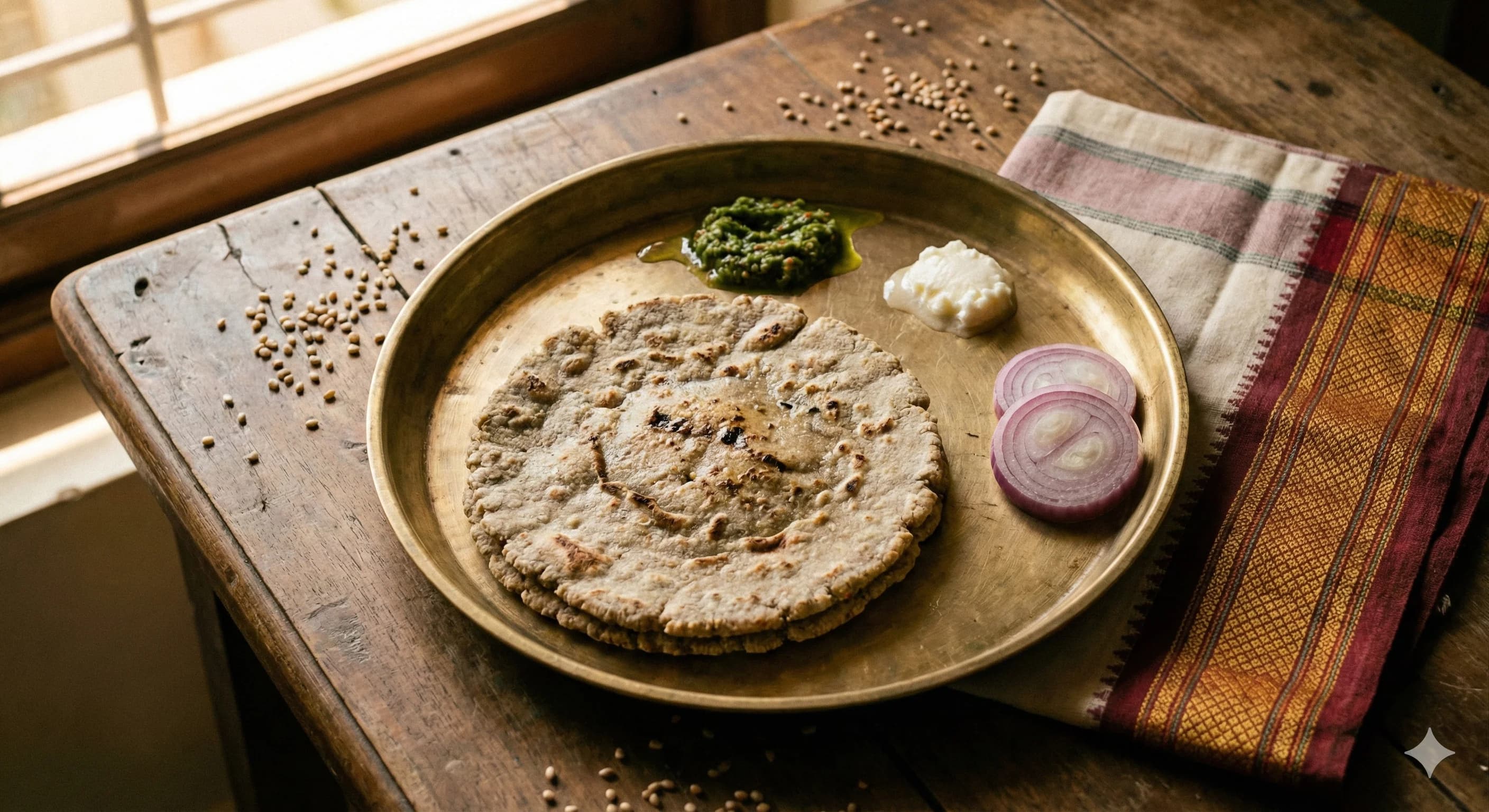
- 1.Jowar flour makes excellent bhakri, pat the dough while warm for pliable rotis
- 2.Whole jowar grains can be cooked like rice after soaking
- 3.Popped jowar (like popcorn) is a popular snack in Maharashtra
- 4.Jowar flour does not have gluten. Add a binder when baking
- 5.Combine with vegetables for a nutritious jowar upma or khichdi
Cultivation
Major States (India)
Maharashtra, Karnataka, Madhya Pradesh, Rajasthan, Tamil Nadu
Global Regions
Sub-Saharan Africa, South Asia, Americas, Australia
Growing Season
Both Kharif (July-October) and Rabi (October-February)
Water Requirement
400-600mm rainfall
Soil Type
Black cotton soils (vertisols), clay loam; tolerates alkaline soils
Harvest Days
100-120 days
History
Origin Region
Northeastern Africa (Sudan-Ethiopia region)
Domestication Period
Approximately 5000-8000 years ago
Archaeological Evidence
One of the earliest cultivated cereals in Africa. Evidence from Deccan Plateau archaeological sites confirms its presence in India by approximately 2000 BCE.
Spread Pattern
Domesticated in northeastern Africa and spread along trade routes to India by 2000 BCE, then to China and Southeast Asia.
Cultural Significance
Jowar bhakri (flatbread) is a cultural staple of Maharashtra and northern Karnataka. It is integral to the food identity of the Deccan Plateau region and is consumed daily by millions.
Side Effects & Precautions
Tannin-iron interaction
Tannin content in sorghum may reduce iron absorption from other foods. People with iron deficiency should be mindful of consuming sorghum with iron-rich foods.
Initial digestive adjustment
May cause gas and bloating initially in people not accustomed to high-fiber foods. Gradual introduction is recommended.
Related Recipes - Sorghum


Sources
- Longvah T, Ananthan R, Bhaskarachary K, Venkaiah K (2017). Indian Food Composition Tables 2017.
Disclaimer: This content is created with the assistance of AI and is based on published research, government sources, and traditional knowledge. While we strive for accuracy, always consult a healthcare professional for medical advice.