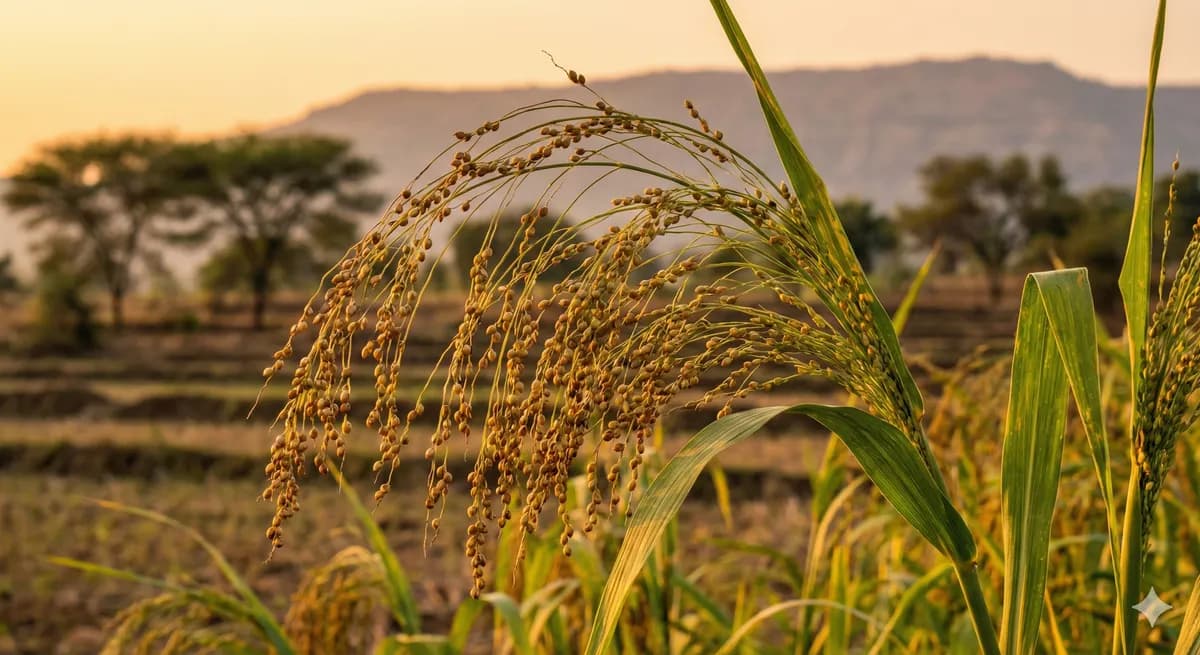
Proso Millet
Panicum miliaceum
Chena / Bari
The oldest domesticated millet, high in protein with the shortest growing season
Names in Indian Languages
| Language | Name |
|---|---|
| Hindi | चेना (Chena) / बरि (Bari) |
| Tamil | பனிவரகு (Panivaragu) |
| Telugu | వరిగెలు (Varigelu) |
| Kannada | ಬರಗು (Baragu) |
| Malayalam | പനിവരക് (Panivaraku) |
| Marathi | वरी (Vari) |
| Bengali | চিনা (China) |
| Gujarati | ચેનો (Cheno) |
| Odia | ବଗୁ (Bagu) |
| Punjabi | ਚੀਨਾ (China) |
| Sanskrit | चीनक (Chinaka) |
Nutrition Profile
per 100g. Source: ICMR-NIN IFCT 2017, Indian Food Composition Tables, National Institute of Nutrition, Hyderabad
Calories
341kcal
Protein
12.5g
Fiber
5.2g
Calcium
14mg
Iron
0.8mg
Glycemic Index
56(low)
| Nutrient | Amount per 100g |
|---|---|
| Calories | 341 kcal |
| Protein | 12.5 g |
| Fat | 1.1 g |
| Carbohydrates | 70.4 g |
| Fiber | 5.2 g |
| Calcium | 14 mg |
| Iron | 0.8 mg |
| Zinc | 1.4 mg |
| Phosphorus | 206 mg |
| Magnesium | 153 mg |
| Potassium | 113 mg |
Proso Millet vs. White Rice
The health information below is for educational purposes only and is not medical advice. Consult a healthcare professional before making dietary changes. Read full disclaimer
Health Benefits
Highest protein among minor millets
Well EstablishedProso millet contains 12.5g protein per 100g, the highest among minor millets. This makes it an excellent plant-based protein source, especially valuable for vegetarian and vegan diets.
Source: ICMR-NIN IFCT 2017
Lecithin may support liver health
Preliminary EvidenceProso millet contains lecithin, a phospholipid that may support liver function and may help in fat metabolism. Preliminary studies suggest this may support overall liver health.
Source: Journal of Cereal Science
Climate-efficient crop
Well EstablishedWith the shortest growing season among millets (60-75 days) and very low water requirements (250-400mm), proso millet is one of the most climate-efficient grains.
Source: ICAR Crop Science Division
Rich in B vitamins especially niacin
Supported by ResearchProso millet is a good source of B-complex vitamins, particularly niacin (vitamin B3), which is important for energy metabolism, nervous system function, and skin health.
Source: Journal of Food Science and Technology
Ayurvedic Properties
Rasa (Taste)
Madhura (sweet), Kashaya (astringent)
Virya (Potency)
Ushna (warm)
Vipaka (Post-digestive)
Katu (pungent)
Guna (Quality)
Laghu (light), Ruksha (dry)
Dosha Effect
Vata
Neutral
Pitta
Neutral
Kapha
Decreases
Therapeutic Uses
- May support muscle building due to high protein content
- Warming quality beneficial in cold seasons
- Light quality is said to support easy digestion
- Traditionally used for strength and vitality
Classical Reference: Sushruta Samhita
Contraindications
- Warming nature may not suit people with excess heat conditions
- Dry quality, balance with ghee or moist preparations
Ayurvedic information presented here is derived from classical texts for educational purposes. It is not medical advice. Always consult a qualified Ayurvedic practitioner or healthcare provider before making dietary changes based on Ayurvedic principles.
How to Cook Proso Millet
Water Ratio
1:3
Soaking Time
20-30 minutes
Cooking Time
15-20 minutes
Best Substitute For
Couscous, rice
Texture
Fluffy, couscous-like
Flavor Profile
Mild, slightly sweet
Cooking Tips
- 1.Soak for 20-30 minutes before cooking
- 2.Cook like rice, the grains turn fluffy and separate
- 3.Excellent in pulao, upma, and salad preparations
- 4.Its couscous-like texture makes it great for cold salads
- 5.Dry roast before cooking for a nuttier, more aromatic flavor
- 6.Can be ground into flour for rotis and pancakes
Cultivation
Major States (India)
Madhya Pradesh, Chhattisgarh, Tamil Nadu, Karnataka, Uttarakhand
Global Regions
China, Russia, Central Asia, Europe (historical), North America (birdseed crop)
Growing Season
Kharif (June-September)
Water Requirement
250-400mm rainfall
Soil Type
Light, well-drained soils; tolerates poor soils
Harvest Days
60-75 days (shortest among millets)
History
Origin Region
Northern China (Cishan archaeological site)
Domestication Period
Approximately 10000 years ago (~8000 BCE), the oldest domesticated millet
Archaeological Evidence
Archaeological evidence from Cishan, China dates to approximately 8000 BCE, making proso millet the oldest domesticated millet in human history.
Spread Pattern
Spread westward from China through Central Asia to Europe, becoming a staple grain of European and Central Asian diets before wheat and rice became dominant. This is the "millet" referenced in European historical texts.
Cultural Significance
Proso millet is historically one of the most important grains in human civilization. It was a staple across the Roman Empire, medieval Europe, and Central Asia. In India, it remains important in tribal and rain-fed farming regions.
Side Effects & Precautions
Goitrogen content
Contains goitrogens that may interfere with thyroid function at high consumption levels. People with thyroid conditions should consume in moderation and consult their doctor.
Antinutrient content
Contains antinutrients like phytates that may reduce mineral absorption. Soaking, sprouting, and cooking help reduce antinutrient levels.
Related Recipes - Proso Millet
No recipes available for this millet yet. Recipes.
Sources
- Longvah T, Ananthan R, Bhaskarachary K, Venkaiah K (2017). Indian Food Composition Tables 2017.
- Murthy KRS (2000). Sushruta Samhita (English Translation).
Disclaimer: This content is created with the assistance of AI and is based on published research, government sources, and traditional knowledge. While we strive for accuracy, always consult a healthcare professional for medical advice.