Kochanleitung
Von Einweichtechniken bis zu Kochmethoden — alles Wissenswerte, um Hirse in Ihrer Küche perfekt zuzubereiten.
Wasser-Hirse-Verhältnis
Verwenden Sie diese Verhältnisse als Ausgangspunkt. Passen Sie die Wassermenge je nach gewünschter Konsistenz an.
| Hirse | Wasserdosierung | Einweichzeit | Kochzeit |
|---|---|---|---|
| Perlhirse | 1:3 | Kein Einweichen noetig | 20-25 Minuten |
| Fingerhirse | 1:3,5 | Kein Einweichen noetig (fuer Mehl) | 15-20 Minuten (Brei) |
| Sorghum | 1:2,5 | Optionales Einweichen 4-6 Stunden (fuer ganze Koerner) | 25-30 Minuten |
| Kolbenhirse | 1:2,5 | 30 Minuten | 15-20 Minuten |
| Kleine Hirse | 1:2,5 | 30 Minuten | 15 Minuten |
| Kodohirse | 1:2,5 | 6-8 Stunden | 20-25 Minuten |
| Japanische Hirse | 1:3 | 2-4 Stunden | 15-20 Minuten |
| Rispenhirse | 1:3 | 20-30 Minuten | 15-20 Minuten |
| Fonio | 1:2 | Kein Einweichen noetig | 5-10 Minuten |
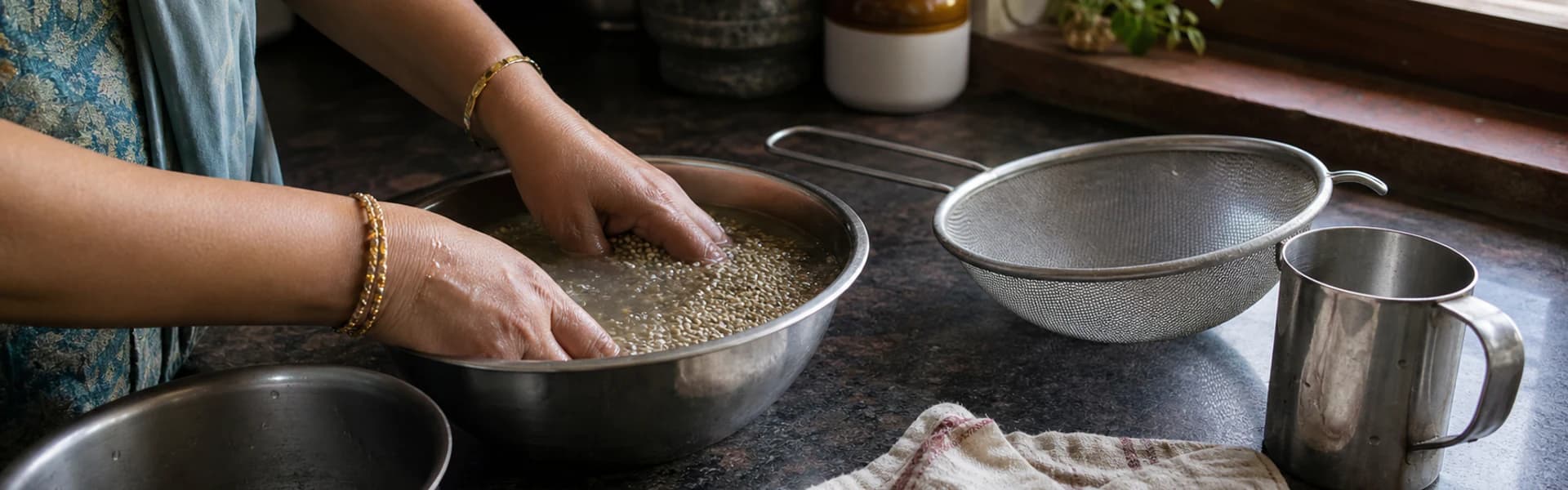
Einweich-Ratgeber
Warum Hirse einweichen? Durch Einweichen werden Phytinsäure und Tannine reduziert und die Verdaulichkeit verbessert. Phytinsäure bindet Mineralstoffe wie Eisen, Kalzium und Zink und verringert deren Bioverfügbarkeit. Einweichen setzt diese Mineralstoffe für eine bessere Aufnahme frei.
Schnelles Einweichen (30 Min. – 2 Stunden)
Geeignet für die meisten kleinen Hirsearten: Kolbenhirse, Kleine Hirse, Kodo-Hirse, Japanische Hirse, Browntop- und Rispenhirse. Gründlich spülen, in Wasser bei Raumtemperatur einweichen, dann vor dem Kochen abgießen.
Langes Einweichen (6–8 Stunden / über Nacht)
Empfohlen für Sorghum und Perlhirse als ganzes Korn (nicht als Mehl). Auch empfohlen für maximale Phytinsäure-Reduktion. Über Nacht einweichen, abgießen und vor dem Kochen spülen.
Einweich-Tipps
- •Durch Einweichen werden Phytinsäure und Tannine reduziert und die Verdaulichkeit verbessert.
- •Verwenden Sie frisches Wasser zum Kochen nach dem Einweichen — das Einweichwasser enthält ausgeschwemmte Antinährstoffe.
- •Durch kurzes Anrösten vor dem Kochen wird der nussige Geschmack intensiviert.
Kochmethoden
Herd
- Hirse gründlich spülen, bis das Wasser klar ist.
- Wasser im Verhältnis gemäß Tabelle zum Kochen bringen.
- Hirse hinzufügen und erneut aufkochen.
- Hitze reduzieren, abdecken und gemäß Tabelle köcheln lassen.
- Vom Herd nehmen und 5 Minuten zugedeckt ruhen lassen. Mit einer Gabel auflockern.
Pressure Cooker
- Rinse and drain the millet.
- Add millet, water (same ratio), and salt to the pressure cooker.
- Close the lid and cook on medium heat for 2-3 whistles.
- Turn off heat and let pressure release naturally (do not force open).
- Open the lid and fluff gently with a fork.
Pressure cooking is faster and works especially well for pearl millet and sorghum.
Rice Cooker
- Rinse and drain the millet.
- Add millet and water to the rice cooker bowl at the recommended ratio.
- Add a pinch of salt and a teaspoon of oil or ghee.
- Close the lid and start the regular cook cycle.
- Once the cooker switches to “warm,” let it rest for 10 minutes.
- Open and fluff with a fork. Serve.
Works well for foxtail, little, barnyard, and kodo millets.
Reducing Antinutrients
Millets contain phytic acid and tannins that can reduce mineral absorption. These simple traditional processing methods significantly reduce these compounds:
Soaking
Soaking millets for 6-8 hours reduces phytic acid content by 20-50%. The water activates the grain's own phytase enzymes, which break down phytic acid. Always discard the soaking water.
Germination / Sprouting
Sprouting millets for 24-48 hours is one of the most effective methods. It can reduce phytic acid by up to 60-70% while also increasing vitamin C, B vitamins, and overall protein digestibility. Finger millet (ragi) sprouts particularly well.
Fermentation
Traditional fermented preparations like dosa/idli batter (using millet instead of rice), ambali, and koozh dramatically reduce antinutrients. Fermentation for 12-24 hours can reduce phytic acid by 50-75% while adding beneficial probiotics.
Roasting / Dry Toasting
Dry roasting millets before cooking reduces tannins and also enhances their nutty flavor. This is a common practice in many traditional recipes (e.g., roasting foxtail millet before making upma or biryani).
Storage Guide
Uncooked Millets
Store in airtight containers in a cool, dry place away from direct sunlight.
Shelf life: 6-12 months
Cooked Millets
Store in sealed containers in the refrigerator. Can also be frozen in portion-sized bags for longer storage.
Fridge: 3-5 days / Freezer: up to 3 months
Millet Flour
Store in airtight containers in the refrigerator, as the exposed oils in flour can turn rancid faster than whole grains.
Shelf life: 2-3 months (refrigerated)
Substitution Guide
Millets can replace common grains in many dishes. Here is a guide to which millets work best as substitutes:
| Millet | Best Substitute For |
|---|---|
| Foxtail Millet | Rice |
| Little Millet | Rice |
| Barnyard Millet | Rice |
| Pearl Millet (flour) | Wheat flour (rotis) |
| Sorghum (flour) | Wheat flour (rotis, breads) |
| Finger Millet (flour) | Wheat / rice flour |
Pro Tips
- 1Cool cooked millet for resistant starch: Letting cooked millet cool before eating increases resistant starch content, which lowers the effective glycemic index and feeds beneficial gut bacteria. This is especially useful for people managing blood sugar.
- 2Toast before cooking for nuttier flavor: Dry roast millets in a pan for 3-4 minutes before adding water. This brings out a pleasant, nutty aroma and also helps the grains stay separate rather than becoming mushy.
- 3Add a pinch of oil while cooking: Adding half a teaspoon of ghee or oil to the cooking water prevents millets from sticking together and gives them a pleasant sheen. This is especially helpful for foxtail and little millet.
Haftungsausschluss: Dieser Inhalt wurde mit Unterstützung von KI erstellt und basiert auf veröffentlichten Studien, behördlichen Quellen und traditionellem Wissen. Obwohl wir auf Genauigkeit achten, konsultieren Sie bitte immer einen Arzt für medizinische Ratschläge.